Inspections, lawyers and appraisals usually come after you've made an offer. The report is for the moment when you can still change your price, add a condition or walk away.
Buyer's guide
Why check the address before you offer?
A listing is written to sell the home. Once your offer is firm, walking away gets expensive. DealScore puts official records for the address in one report before you sign, and tells you in plain words what to ask.
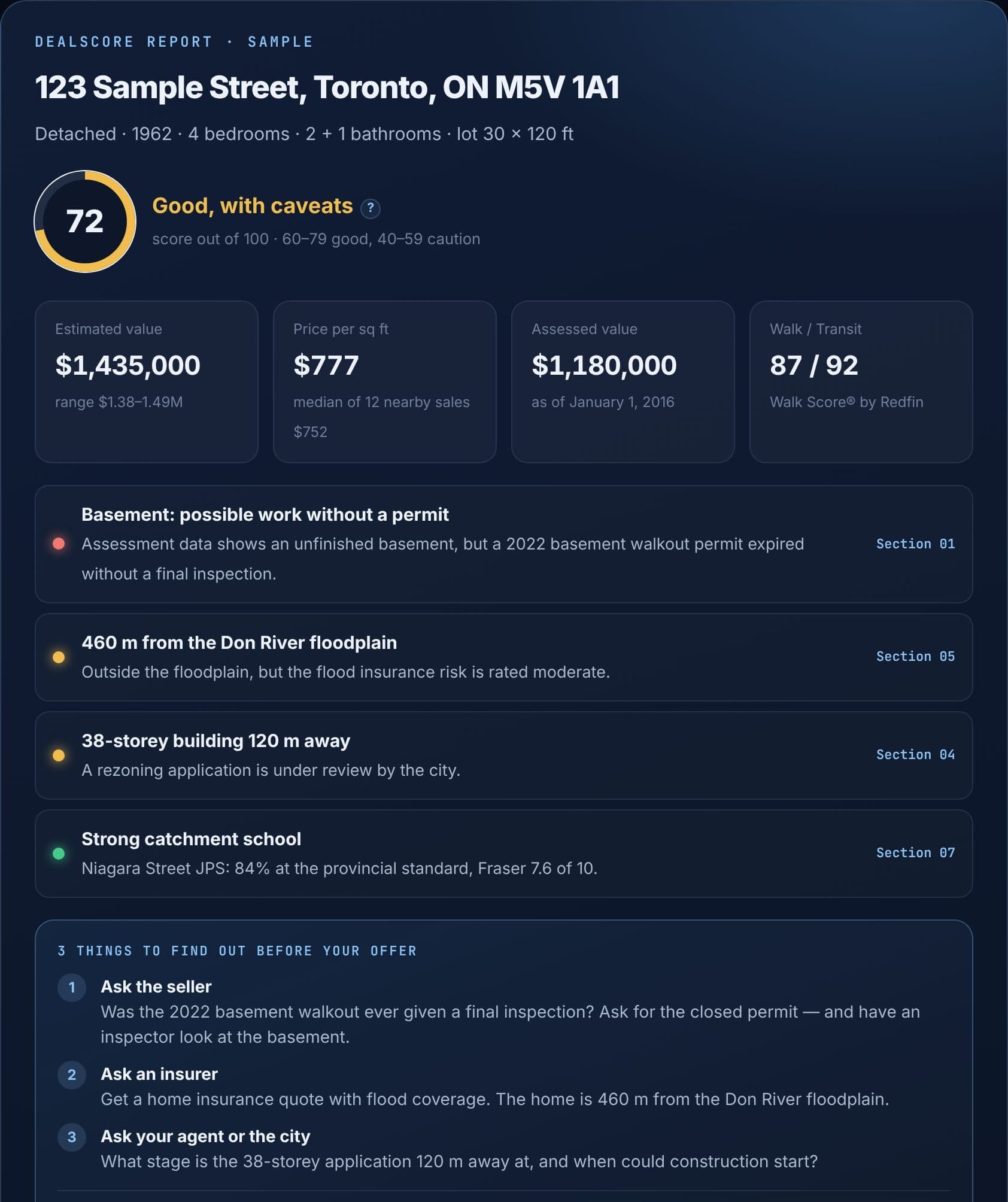
Why our report
Three things make it different
Permits, flood maps, development applications, schools, crime, rates. Every check says where it came from. Up to 36 official sources, all listed on our Data sources page.
Each section starts with what it means for you. Every line has a "?" that explains why it matters and what to do. The first page lists the three things to find out before your offer.
Who tells you what
Everyone in the deal sees a different part
Each of them is useful. None of them looks at everything about the address before you sign.
WhoWhat they give youWhat they usually don't cover
The listingPhotos, the asking price and the best features of the home.Open permits, flood risk, what's planned next door.
Your agentMarket knowledge, showings and negotiation.A written check of public records for the address.
Home inspectorThe structure and systems in person: roof, wiring, plumbing, furnace.Zoning, development, flood maps, schools, crime.
Your lawyerTitle, liens, closing documents, condo status certificate.The neighbourhood and the risks around the home.
DealScoreOfficial records for the address and the area, before the offer, in plain words.It doesn't replace an inspector or a lawyer. It tells you what to ask them.
The 15 questions
Fifteen questions every buyer asks, and where the report answers them
Screenshots from our sample report (fictional address, illustrative numbers). Your report shows the same sections for your address.
In the report nowFull reportSection in progress
01Full report
Is the house what the listing says?
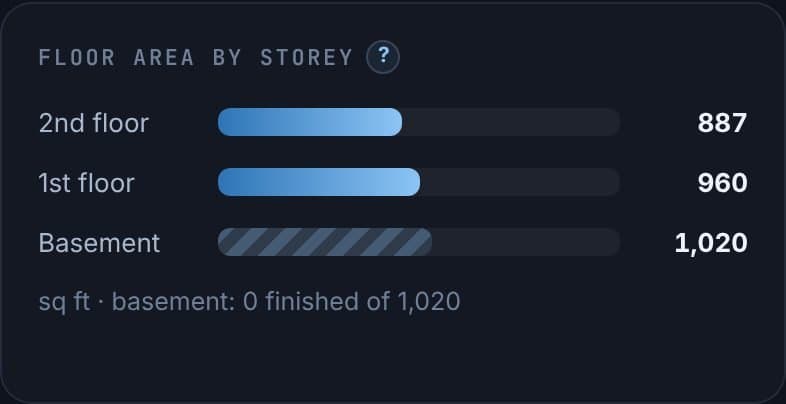
- What you see
- The official floor area by storey, basement, bedrooms, bathrooms, year built and lot size.
- What to look at
- Compare with the listing. A finished basement in the listing but "unfinished" in the record is a question to ask.
- Before you offer
- Ask the seller to explain any difference and for the permits for work that changed the home.
The house
01Full report
Is the house what the listing says?
- What you see
- The official floor area by storey, basement, bedrooms, bathrooms, year built and lot size.
- What to look at
- Compare with the listing. A finished basement in the listing but "unfinished" in the record is a question to ask.
- Before you offer
- Ask the seller to explain any difference and for the permits for work that changed the home.
02In the report now
Was work done without permits?
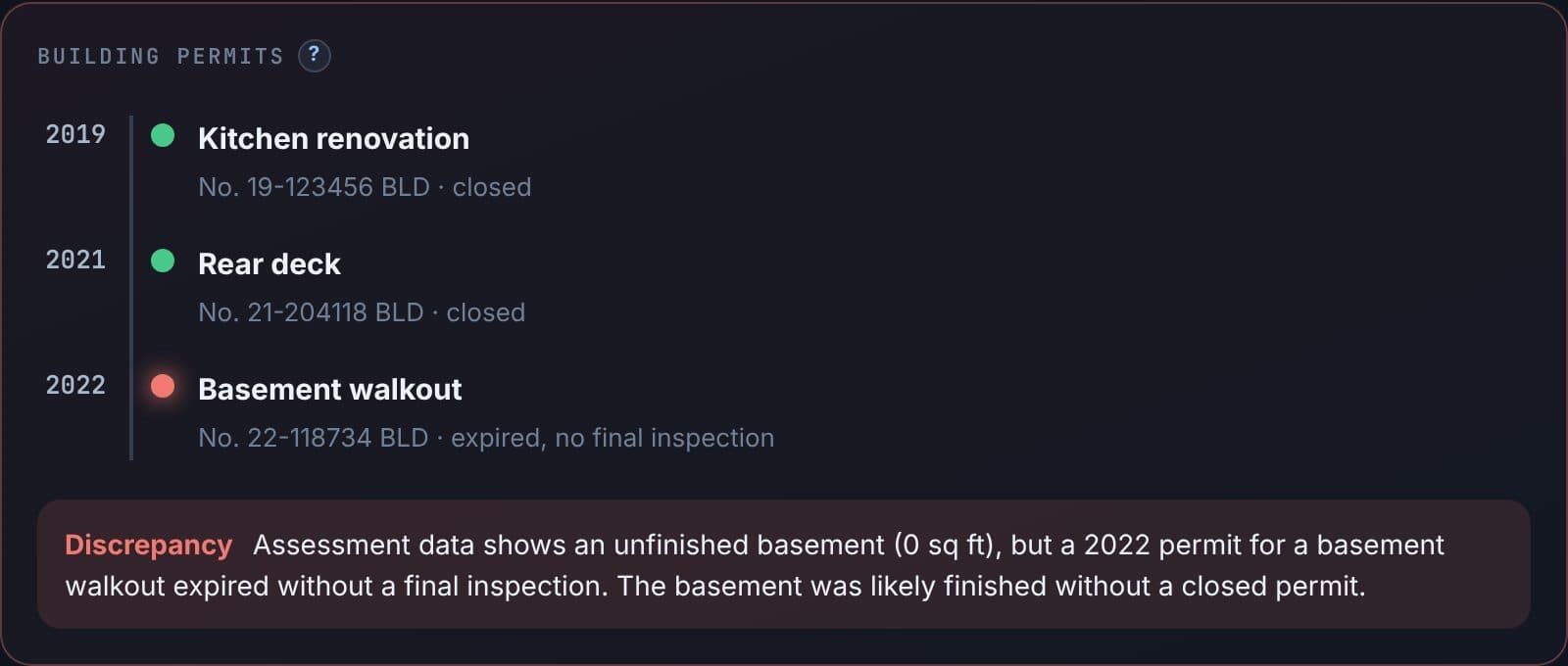
- What you see
- Building permits for the address with their status, plus property standards orders where the city publishes them.
- What to look at
- Permits that are open or expired without a final inspection, especially for basements, additions and decks.
- Before you offer
- Ask for the closed permit or the final inspection. Have your inspector look closely at that work.
03Full report
When was it last sold — and was it bought to flip?
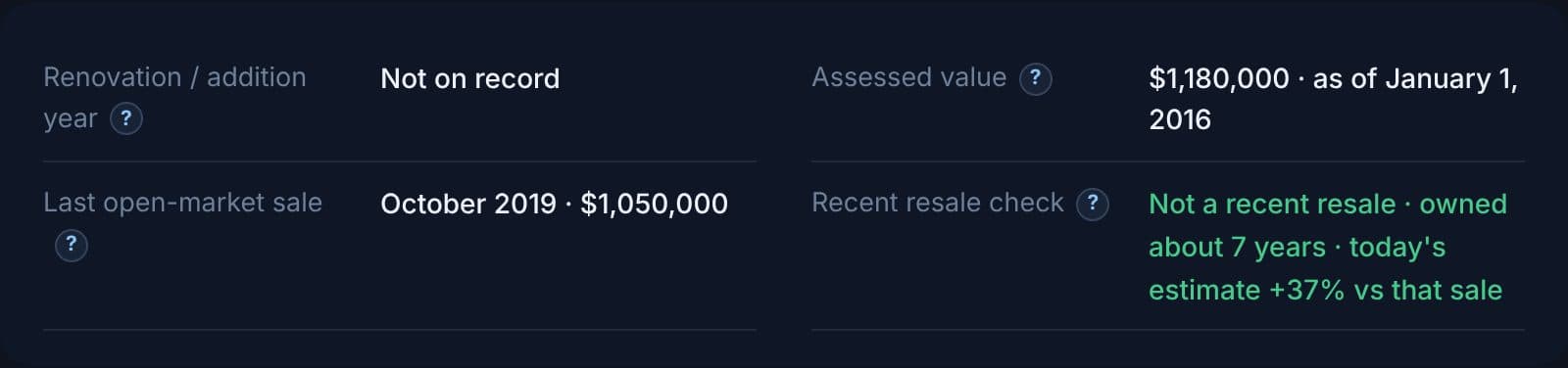
- What you see
- The last open-market sale (date and price), any permits or renovations recorded since, and how today's estimate compares with that sale.
- What to look at
- A sale within the last two years followed by renovations. A recent sale isn't a problem in itself — it's a reason to look closely at the work. Long ownership is normal.
- Before you offer
- Ask why it's being sold so soon, who did the work, and for permits, receipts and warranties. Have your inspector check the renovated areas.
04Section in progress
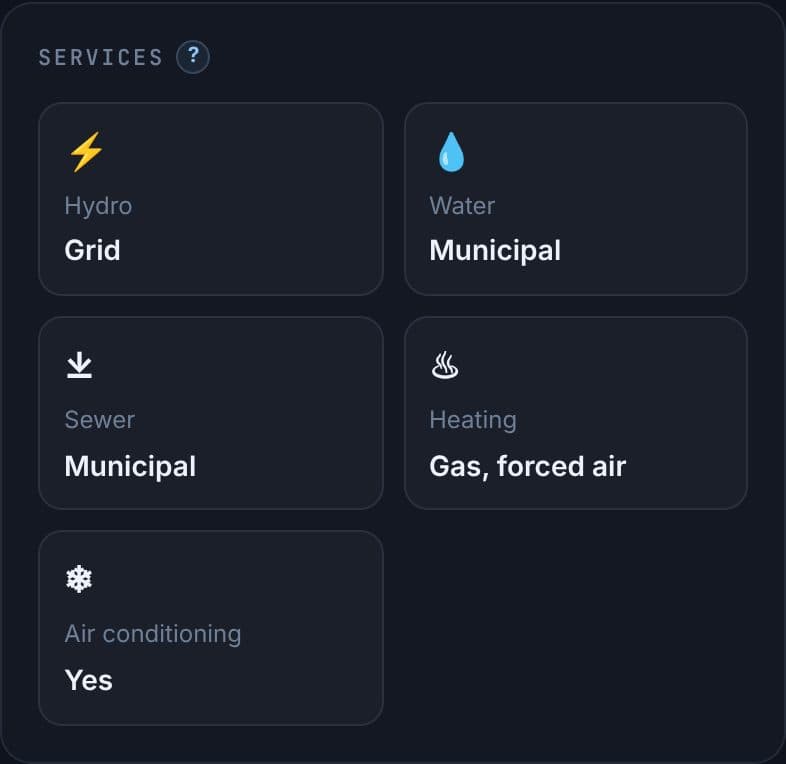
Will it cost a lot to heat — and can I get help to upgrade?
- What you see
- Today: heating type, air conditioning and services from the property record. Coming: estimated energy use, emissions and upgrade recommendations with rebates.
- What to look at
- An old furnace, electric baseboards, single-pane windows or a thin attic. These drive the bills, and they're what rebates pay for.
- Before you offer
- Ask the seller for 12 months of gas and hydro bills, the age of the furnace and water heater, and whether either is rented.
Help with upgrades in Ontario
Open in the sample →- Home Renovation SavingsEnbridge Gas and Save on Energy, with the Ontario Government: rebates for heat pumps, insulation, windows and doors, solar and more. In November 2026 the program lists up to $12,000 for heat pumps and up to $7,700 for insulation; some rebates need a home energy assessment.Program site ↗
- Energy Affordability ProgramSave on Energy: free upgrades for income-eligible households, including a heat pump for some oil-heated homes.Program site ↗
- Toronto Home Energy Loan ProgramLow-rise homes in Toronto: up to $125,000 for energy upgrades, repaid through the property tax bill.Program site ↗
- Federal Greener Homes Grant and LoanClosed to new applicants. Don't count on them.Program site ↗
Programs and amounts change. Check the program site before you count on a rebate.
05In the report now
Buying a condo — what should I check?

- What you see
- A link to the Condominium Authority of Ontario's free public registry: the condo corporation, units, board and management company.
- What to look at
- The status certificate: reserve fund, special assessments, lawsuits, planned fee increases, rules on pets and rentals.
- Before you offer
- Make your offer conditional on your lawyer's review of the status certificate.
Price & money
06Full report
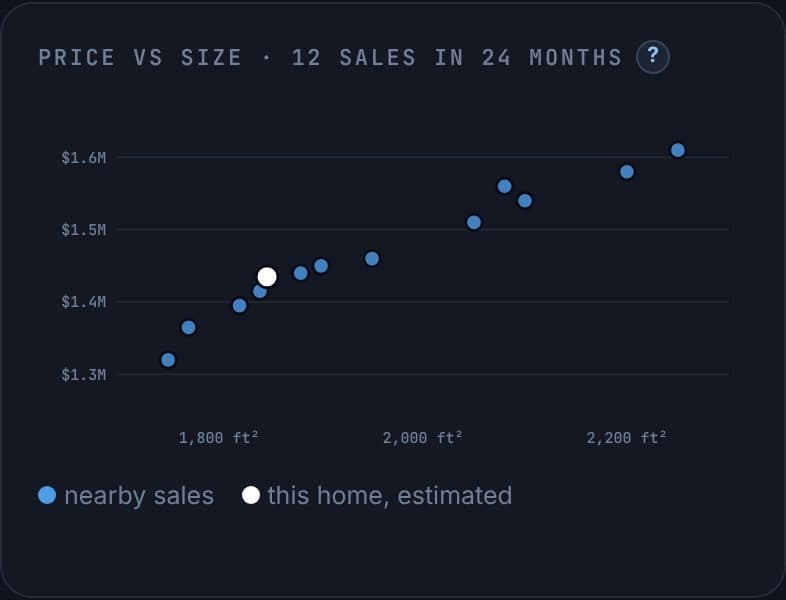
Am I overpaying?
- What you see
- An estimated value with a range, and up to 12 sales of similar homes nearby, plotted by price and size.
- What to look at
- Is the price you're thinking of inside the range? Compare price per square foot with the median of nearby sales.
- Before you offer
- If you'd pay above the range, ask your agent what justifies it: a renovation, a bigger lot, a better street.
07In the report now
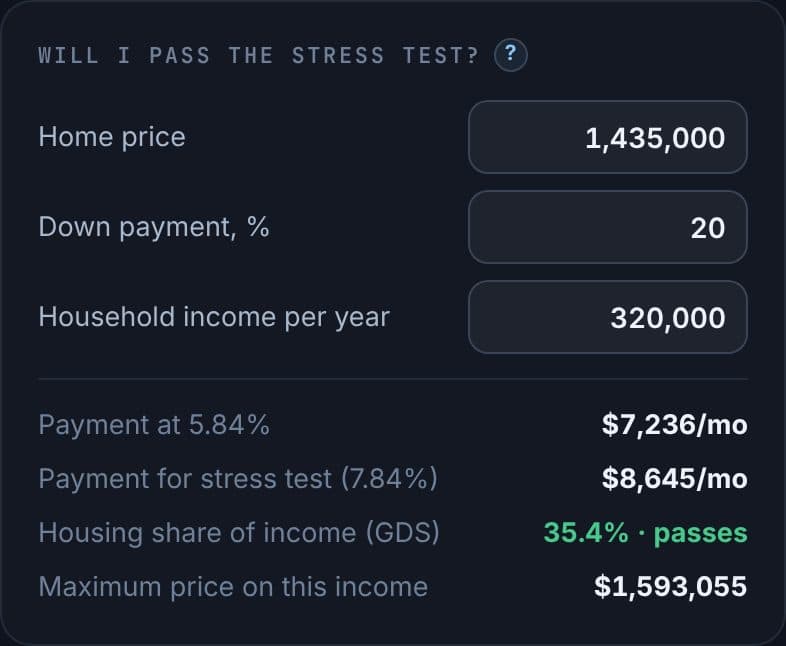
Can I afford the payments?
- What you see
- Current mortgage rates, the stress-test rate, and a calculator: payment, share of income and maximum price.
- What to look at
- Housing costs above 39% of your income mean you likely won't qualify at that price.
- Before you offer
- Get pre-approved with your own numbers before you offer.
08In the report now
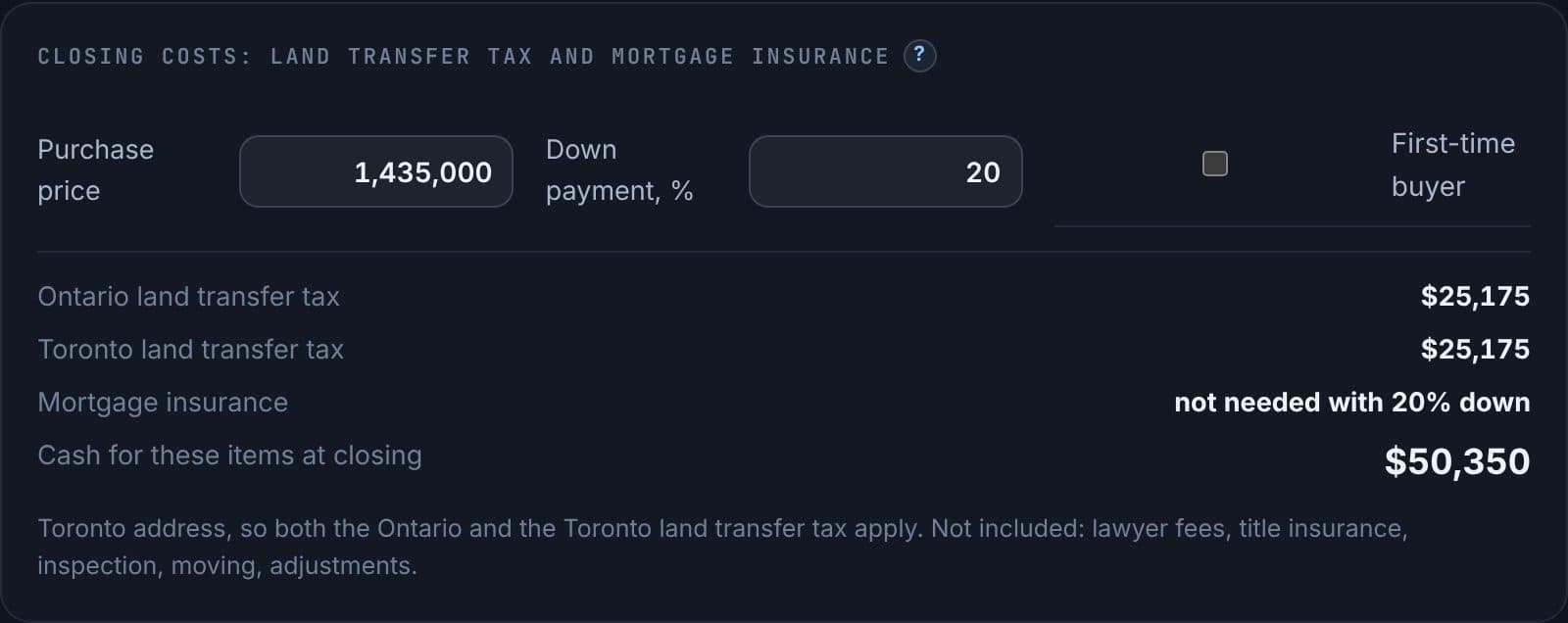
How much cash do I need on closing day?
- What you see
- A closing-costs calculator: Ontario and Toronto land transfer tax, first-time buyer refunds, mortgage insurance and the sales tax on it.
- What to look at
- Land transfer tax is paid in cash on closing day and can't go into the mortgage.
- Before you offer
- Plan this cash on top of your down payment, plus your lawyer, title insurance, inspection and moving.
Risks around
09In the report now
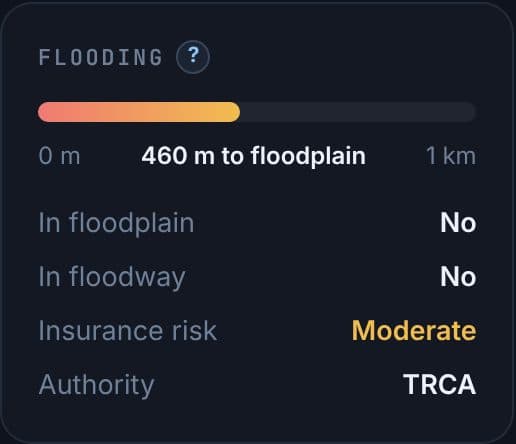
Will the basement flood?
- What you see
- Distance to the floodplain and floodway, the flood insurance risk, the conservation authority, and the City's basement flooding study areas.
- What to look at
- Inside or near a floodplain, or in a basement flooding study area.
- Before you offer
- Get an insurance quote with flood coverage. Ask about past water, a backwater valve and a sump pump.
10In the report now
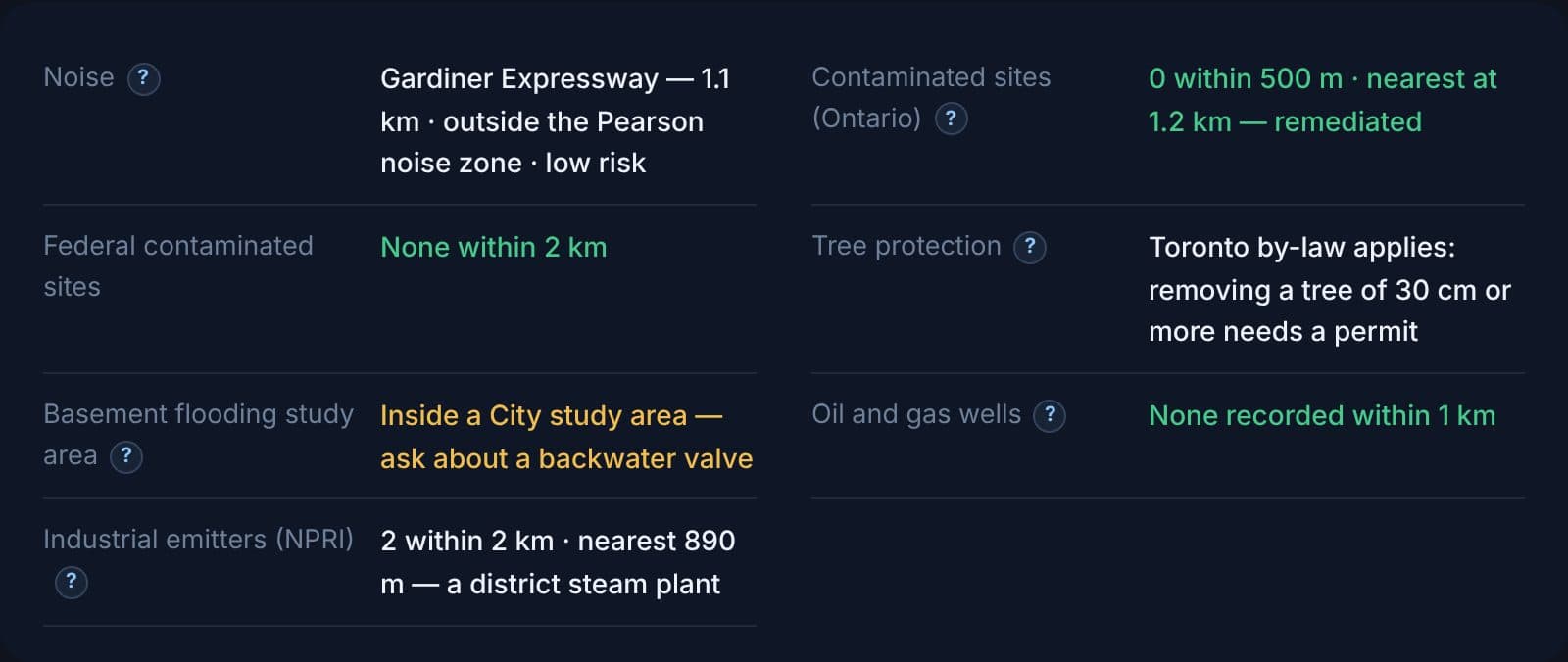
Is the area clean and quiet?
- What you see
- Distance to the nearest expressway and the Pearson noise area, contaminated sites, industrial emitters, old oil and gas wells, radon for the postal area and current air quality.
- What to look at
- A highway or flight path close by, a contaminated site that wasn't cleaned up, radon above the 200 Bq/m³ guideline.
- Before you offer
- Visit at rush hour and in the evening. Ask whether radon was ever tested; a long-term test kit is inexpensive.
11In the report now
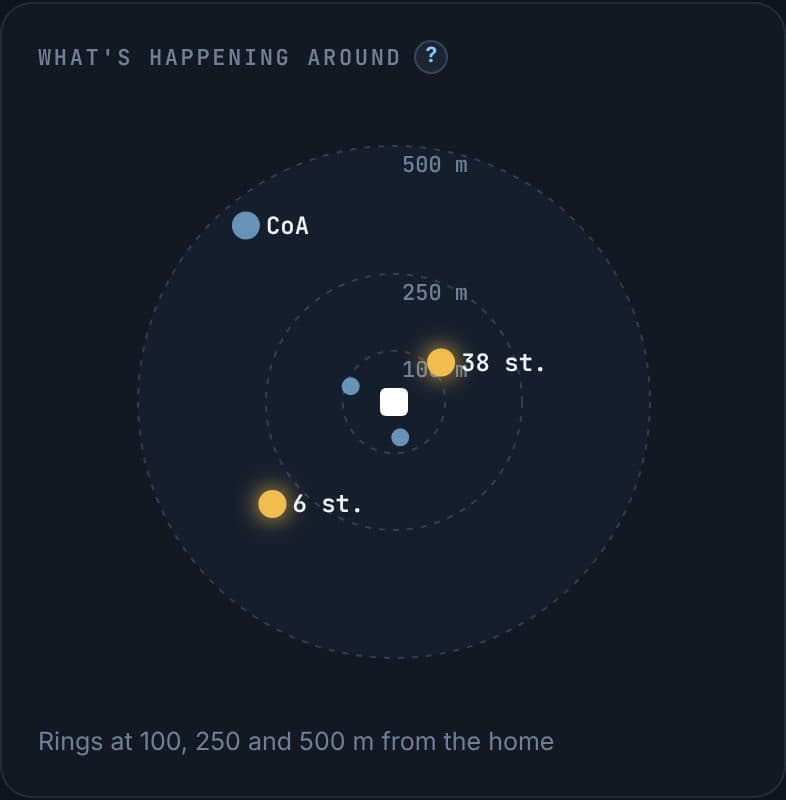
What will be built next door?
- What you see
- Development applications and neighbours' permits within 500 m, on a map with rings at 100, 250 and 500 m.
- What to look at
- Tall buildings, rezoning and big projects close to the home, and what stage they're at.
- Before you offer
- Ask the city or your agent about the application's stage and when construction could start.
Life there
12In the report now
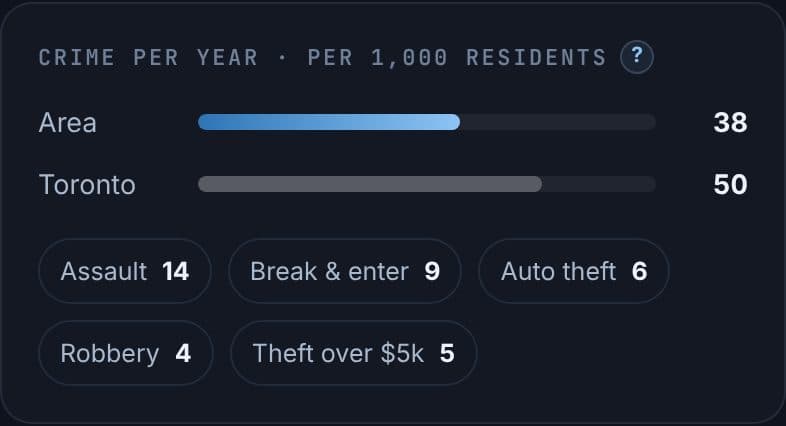
Is it a safe neighbourhood?
- What you see
- Reported crime per 1,000 residents compared with the city, by category, plus income, growth, age of residents and rents.
- What to look at
- The categories that matter to you, and the trend rather than one number.
- Before you offer
- Walk the street at different times of day. Talk to a neighbour if you can.
13In the report now
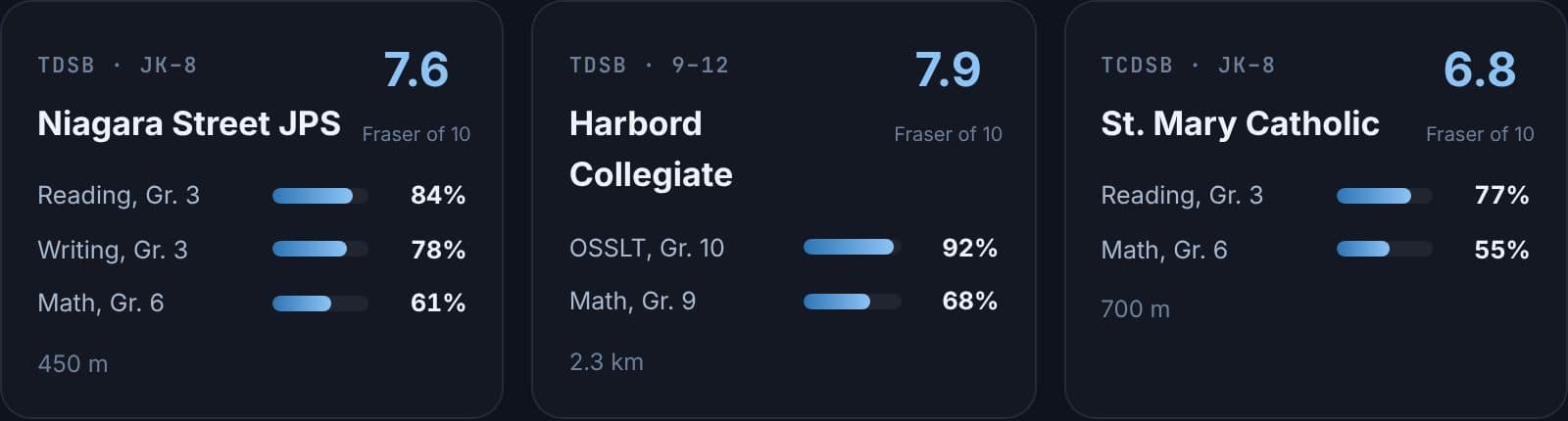
Are the schools good — and is there child care?
- What you see
- Catchment schools with EQAO results and Fraser ratings, French Immersion, programs, and licensed child care in the postal area.
- What to look at
- Which schools the address is actually zoned for. That isn't always the nearest one.
- Before you offer
- Confirm the boundary with the school board, and call child care centres early — many have waitlists.
14In the report now
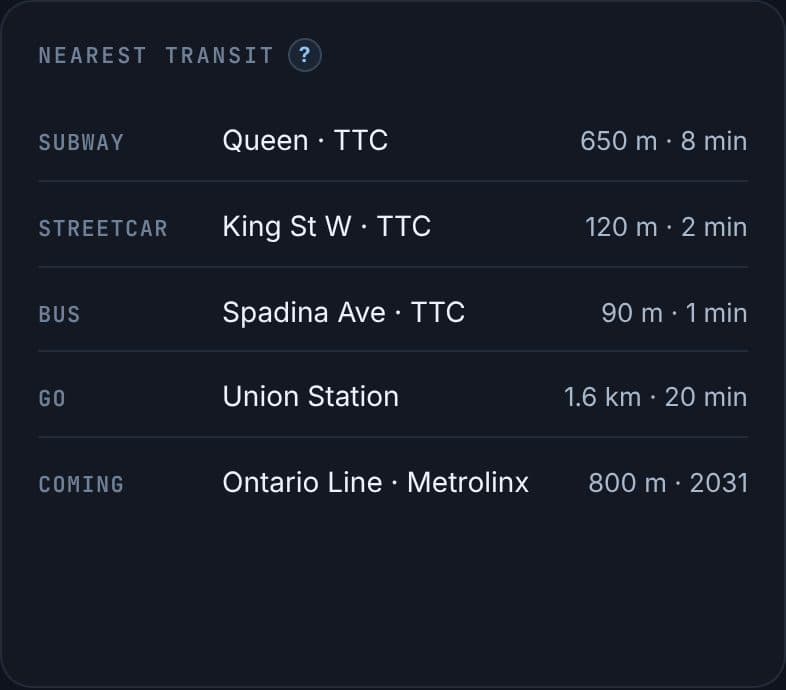
How will I get to work?
- What you see
- Walk, Transit and Bike Scores, the nearest subway, streetcar, bus and GO stops with walking time, and planned transit lines.
- What to look at
- Your real commute at rush hour, and whether a planned line has a firm opening date.
- Before you offer
- Try the trip at rush hour before you offer.
15In the report now
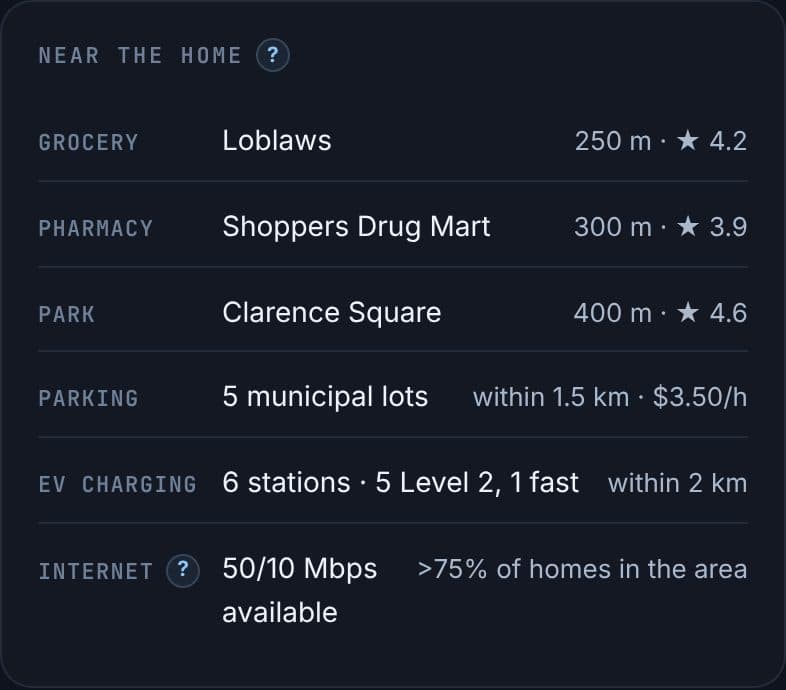
What's nearby day to day?
- What you see
- Grocery, pharmacy, parks, parking, EV charging, internet speeds available in the area, and well-rated shops and restaurants within 800 m.
- What to look at
- What you'll use every week. If you work from home, internet matters as much as shops.
- Before you offer
- Ask internet providers to confirm service at the exact address.
Full report: these sections use licensed property data. They will appear in reports once the licence is finalized. Until then you can see them in the sample.
How to read your report
Eight things to know before you open it
The first page gives you the answer. The sections give you the proof.
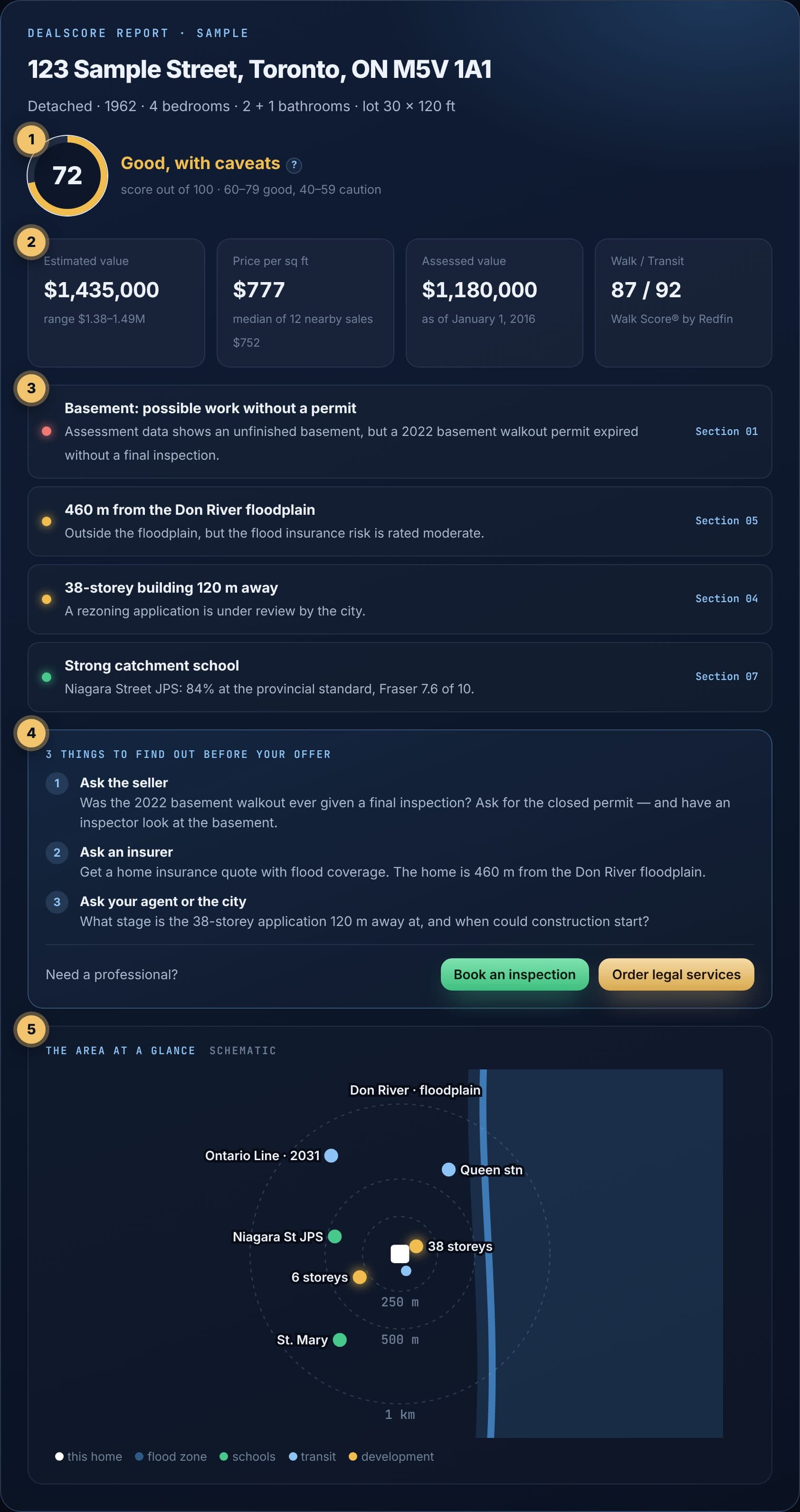
- 1The score
Out of 100. 80 and above is strong, 60–79 good, 40–59 caution, under 40 high risk. It sums up the checks. The findings below matter more than the number.
- 2Key numbers
Estimated value and its range, price per square foot against nearby sales, the assessed value (frozen at January 1, 2016 in Ontario) and Walk / Transit Scores.
- 3Findings in colour
Red means a risk to check, yellow means pay attention, green is good. Each finding links to its section.
- 43 things before your offer
The most important questions for this address and who to ask: the seller, an insurer, the city, an inspector or a lawyer.
- 5The area map
A schematic of what's around: floodplain, schools, transit, development. It shows distances, not exact boundaries.
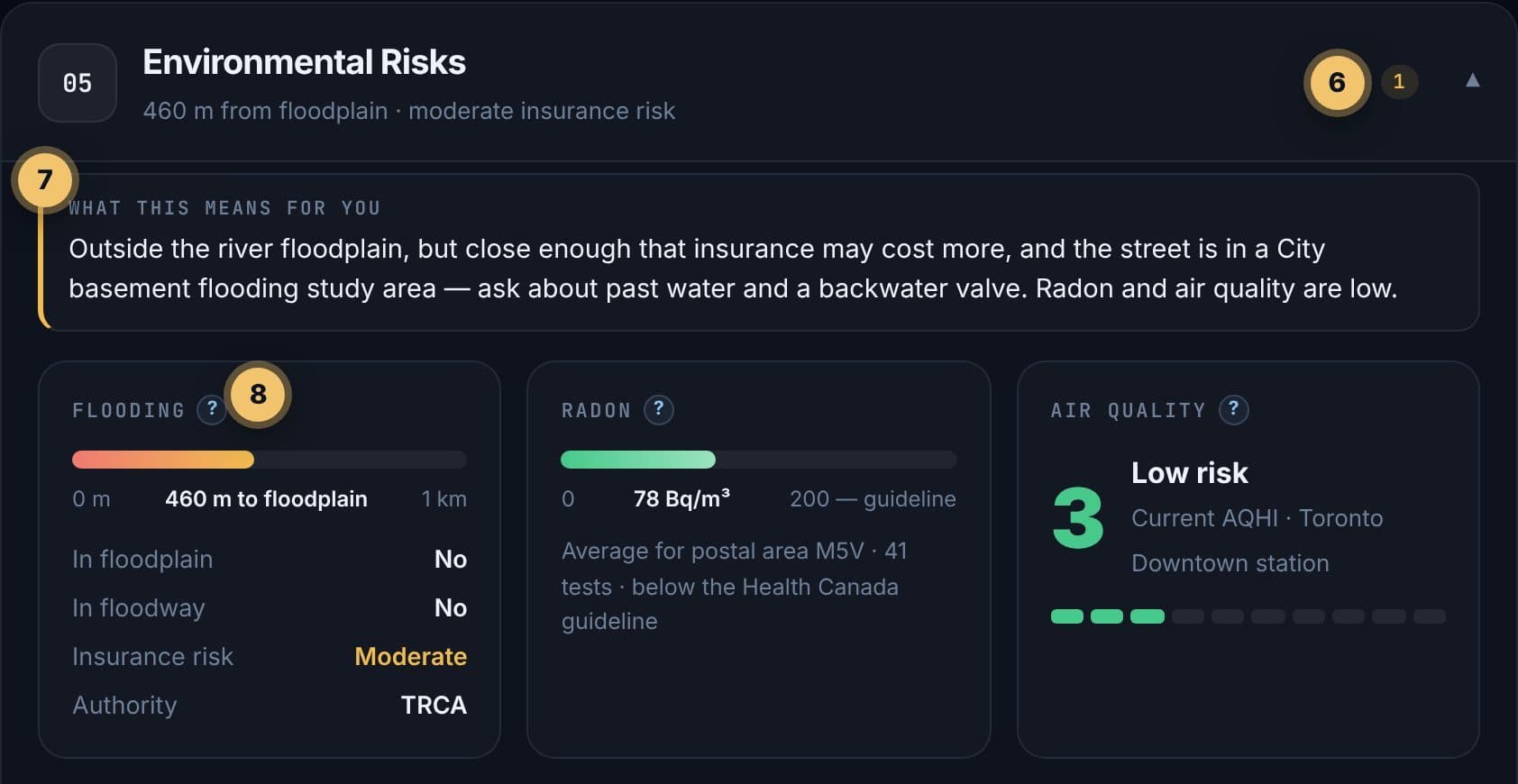
- 6Section counts
Each section shows how many checks need attention. Start with the red and yellow ones.
- 7What this means for you
Two or three sentences at the top of every section. Read these first, then the details.
- 8The "?" buttons
Next to each line: why it matters and what to do. No jargon, no invented statistics.
Red flags
Ten things worth a second look before you sign
None of these is a reason to walk away on its own. Each one is a question to answer before your offer is firm.
A permit that expired without a final inspection
The work may not have been checked. Ask for the final inspection.
Inside or right next to a floodplain
Insurance can cost more or exclude flood. Get a quote first.
A City basement flooding study area
Sewers in the area have backed up before. Ask about a backwater valve.
A tall building or rezoning application nearby
Years of construction and a different view. Check the stage.
Radon above 200 Bq/m³ in the postal area
Health Canada's guideline. A test kit is cheap; fixing it is possible.
You don't pass the stress test at this price
Housing costs above 39% of income. Get pre-approved first.
A contaminated site close by
Check whether it was cleaned up and what it was.
An old oil or gas well nearby
Old wells can leak if they weren't sealed. Ask your inspector.
Resold recently after a quick renovation
Ask for permits, receipts and warranties.
Full reportThe official floor area or basement differs from the listing
Ask the seller to explain and show the permits.
Full reportFree checklist
The before-offer checklist
Every question from this guide on one printable page: what to ask the seller, the city, an insurer, your inspector and your lawyer.
- 32 questions in 5 groups
- Print it or keep it on your phone
- Works with or without a DealScore report
Questions
Short answers
Is this a home inspection?
No. An inspector checks the house in person. DealScore checks public records about the address and the area. They work best together: the report tells you what to ask your inspector.
Where does the data come from?
Up to 36 official sources: cities, conservation authorities, the province, the federal government, school boards and police services. Every source is listed on our Data sources page.
What does "full report" mean?
Some sections, like the value estimate, comparable sales and the official floor area, use licensed property data. They'll appear in reports once the licence is finalized. The sample shows how they'll look.
Which addresses can I check?
Any address in Ontario. Coverage is most complete in 16 GTA cities; the Data sources page shows what's available in each.
When should I order the report?
Before you make an offer, ideally as soon as a home is on your shortlist. It's still useful during a conditional period.
Check the address before you offer
One address, official sources, plain language.